Animals
Do Cats Miss You When You're Gone?
By Emily Phillips

At a Glance
- Cats showed different behavior when separated from and reunited with familiar people.
- Physical contact often increased after reunions.
- Cats meowed more during absences and reunions.
- Researchers found signs of attachment, but cats expressed it differently than dogs.
My two cats have very different personalities.
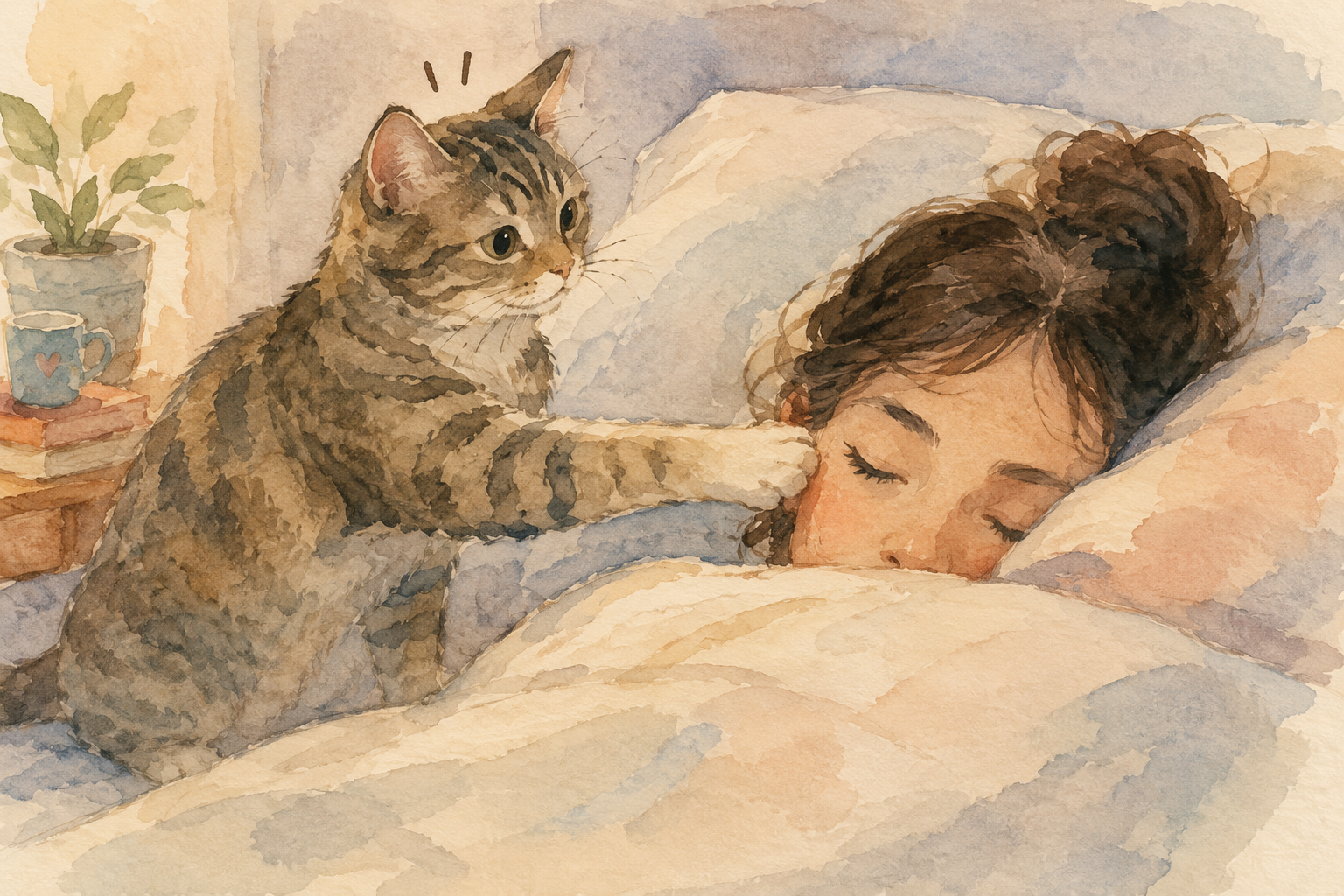
Mika is the needy one. If I sit down, there is a decent chance she will appear a few minutes later demanding attention.
Mothra is more independent. She is perfectly capable of entertaining herself and often acts as though she has more important things to do than spend time with me.
Which is why I always find it surprising when she seeks me out anyway.
Whether she is bringing over her favorite toy, curling up on my lap, or suddenly deciding to follow me from room to room, she occasionally reminds me that independence and attachment are not necessarily opposites.
That raises an interesting question: do cats actually miss their humans?
A recent study explored that possibility.
What researchers found
A 2025 study explored attachment behavior in domestic cats by observing how cats responded to familiar and unfamiliar people during different stages of separation and reunion. Researchers adapted a test often used in attachment research and studied both household cats and shelter cats.
The cats often behaved differently depending on whether a familiar person was present. Physical contact tended to increase after reunions, and meowing was most common during absences and reunions. Household cats also showed more exploration and play, especially after reconnecting with their caregiver.
Shelter cats showed attachment related behaviors too, although their responses looked somewhat different. They were generally more passive and played less during testing.
The researchers concluded that cats do form attachment relationships, but factors like environment, stress, and personality can affect how those attachments appear.
What it probably means
For years, cats carried a reputation for being emotionally independent roommates who occasionally accepted payment in treats.
Cats may have done a better job marketing their independence than they deserve.
The study does not prove that cats sit by the window dramatically counting the days until you return. But it does suggest they notice when important people are gone and respond when those people come back.
The tricky part is that cats often express attachment in quieter ways than dogs. A dog may launch itself across the room. A cat may simply follow you into the bathroom after ignoring you for an hour.
Scientifically, both can be signs that the relationship matters.
Things Worth Keeping in Mind
- ✦The study looked at attachment behavior, not emotions directly.
- ✦Cats vary a lot in personality and sociability.
- ✦Stress and environment can influence how attachment appears.
- ✦Researchers still debate exactly how cat attachment compares to dog attachment.
The Takeaway
The evidence suggests cats form meaningful bonds with familiar people and notice their absence.
Whether cats "miss us" in the exact human sense remains difficult to prove.
What researchers can say is that many cats behave differently when their people leave and when they return.
For animals with a reputation for not caring, that is a surprisingly meaningful finding.
Further Reading
Curious to explore the original research? You can read the study here:
Kappel, I., & Materne, B. (2025). Impact of Living Environment on Attachment Behaviour in Domestic Cats from Private Homes and Shelters. Animals, 15(24), 3521. https://doi.org/10.3390/ani15243521